Skip to content

OPEN TODAY: 10 A.M.–5 P.M.

Tickets

Visual Materials

Two Mexican men panning for gold in the Picacho region of the Colorado River, 1890


You might also be interested in
  • A gold prospector, Pete Dailey, and two burros loaded with equipment, Death Valley

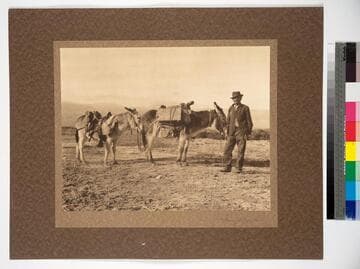
    A gold prospector, Pete Dailey, and two burros loaded with equipment, Death Valley

    Visual Materials

    A man with two burros carrying gold prospecting equipment, a rifle and other goods.

    photCL 312
  • Picacho. Castle Dome on the Colorado River

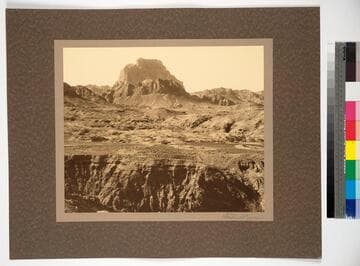
    Picacho. Castle Dome on the Colorado River

    Visual Materials

    Landscape view of desert, showing mountains, rocks, crevices.

    photCL 312
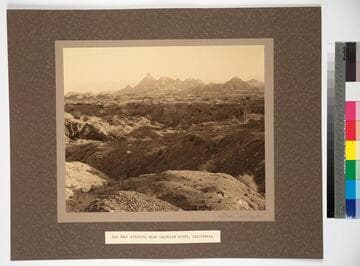
  • Picacho. The earliest Gold Placer location in California

    Picacho. The earliest Gold Placer location in California

    Visual Materials

    View of desert landscape with large crevices.

    photCL 312
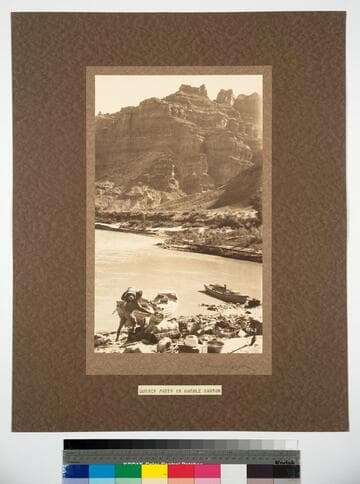
  • Image not available

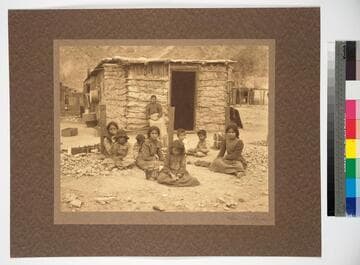
    Cocopah Indian children. Delta of the Colorado River, Lower California, Mexico

    Visual Materials

    This set of photographs by Frederick Monsen focuses on Native Americans of the Southwest in mostly candid views taken in Pueblo communities, approx. 1886-1911. Photographs include portraits, ceremonies, dances, pueblos, livestock and scenes of daily activities. A smaller portion of the collection consists of landscapes, cliff-dwellings, ruins, gold miners, wagons and scenes of pioneer life in the West. Some photographs were made by Monsen while he was with U.S. Geological Surveys (including the Brown-Stanton survey of 1889), and others during his own photography trips. The majority of Native Americans pictured are Hopi and Navajo, but there are also Paiute, Apache, and Pueblo Indians. There are a few views of Mojave Indians of Southern California, and natives of Baja, Mexico. There are several views of Indian children, shown with and without clothes, in their daily activities. Scenes of non-Indian Western life include men in covered wagons on trails, gold prospectors and stagecoaches. There are many artistic landscape views of canyons, buttes and mesas; Death Valley; salt beds; ancient ruins; cactus and other desert plants. Unusual subjects of note are three photographs of skeletons in the deserts of Arizona and one view of the covered bodies of prospectors being carried on burros. The prints are all signed by Monsen and have typed or handwritten captions on the back, written by Monsen.

    photCL 312

  • Image not available

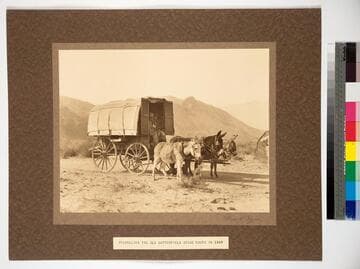
    Playing a Lone Hand. Crossing the Arizona Desert near Colorado River. Pioneers of 1886

    Visual Materials

    This set of photographs by Frederick Monsen focuses on Native Americans of the Southwest in mostly candid views taken in Pueblo communities, approx. 1886-1911. Photographs include portraits, ceremonies, dances, pueblos, livestock and scenes of daily activities. A smaller portion of the collection consists of landscapes, cliff-dwellings, ruins, gold miners, wagons and scenes of pioneer life in the West. Some photographs were made by Monsen while he was with U.S. Geological Surveys (including the Brown-Stanton survey of 1889), and others during his own photography trips. The majority of Native Americans pictured are Hopi and Navajo, but there are also Paiute, Apache, and Pueblo Indians. There are a few views of Mojave Indians of Southern California, and natives of Baja, Mexico. There are several views of Indian children, shown with and without clothes, in their daily activities. Scenes of non-Indian Western life include men in covered wagons on trails, gold prospectors and stagecoaches. There are many artistic landscape views of canyons, buttes and mesas; Death Valley; salt beds; ancient ruins; cactus and other desert plants. Unusual subjects of note are three photographs of skeletons in the deserts of Arizona and one view of the covered bodies of prospectors being carried on burros. The prints are all signed by Monsen and have typed or handwritten captions on the back, written by Monsen.

    photCL 312

  • Image not available

    The lowest depression of the Colorado Desert (265 feet below sea level) before the overflow of the Colorado River - 1891 - filled the basin and formed the Salton Sea

    Visual Materials

    This set of photographs by Frederick Monsen focuses on Native Americans of the Southwest in mostly candid views taken in Pueblo communities, approx. 1886-1911. Photographs include portraits, ceremonies, dances, pueblos, livestock and scenes of daily activities. A smaller portion of the collection consists of landscapes, cliff-dwellings, ruins, gold miners, wagons and scenes of pioneer life in the West. Some photographs were made by Monsen while he was with U.S. Geological Surveys (including the Brown-Stanton survey of 1889), and others during his own photography trips. The majority of Native Americans pictured are Hopi and Navajo, but there are also Paiute, Apache, and Pueblo Indians. There are a few views of Mojave Indians of Southern California, and natives of Baja, Mexico. There are several views of Indian children, shown with and without clothes, in their daily activities. Scenes of non-Indian Western life include men in covered wagons on trails, gold prospectors and stagecoaches. There are many artistic landscape views of canyons, buttes and mesas; Death Valley; salt beds; ancient ruins; cactus and other desert plants. Unusual subjects of note are three photographs of skeletons in the deserts of Arizona and one view of the covered bodies of prospectors being carried on burros. The prints are all signed by Monsen and have typed or handwritten captions on the back, written by Monsen.

    photCL 312