Skip to content

Visual Materials

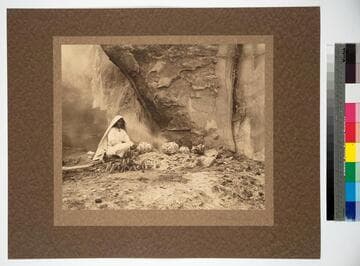
The best potter in Zuniland


You might also be interested in
  • Zuni Pottery Maker, Decorating

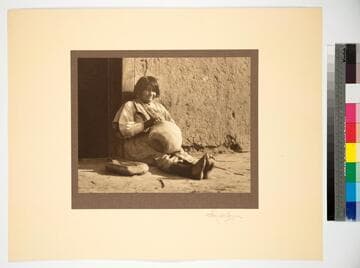
    Zuni Pottery Maker, Decorating

    Visual Materials

    Zuni woman seated beside door way and decorating a pot.

    photCL 312
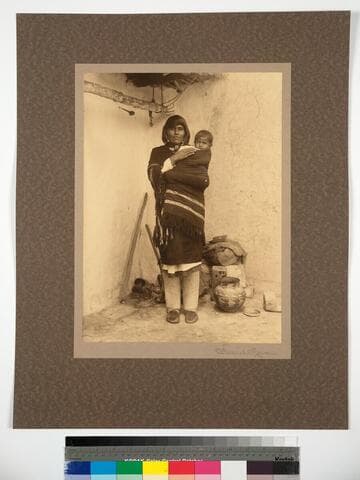
  • Zuni woman with baby in her lap, leaning against a wood ladder

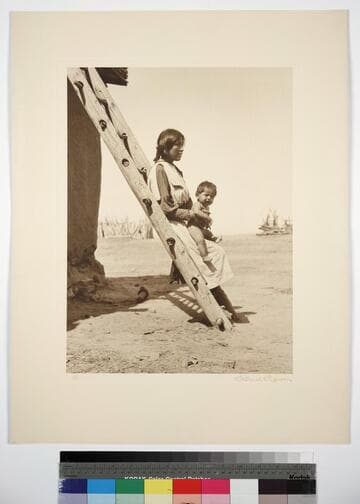
    Zuni woman with baby in her lap, leaning against a wood ladder

    Visual Materials

    Zuni woman leaning against a ladder with a baby in her lap.

    photCL 312
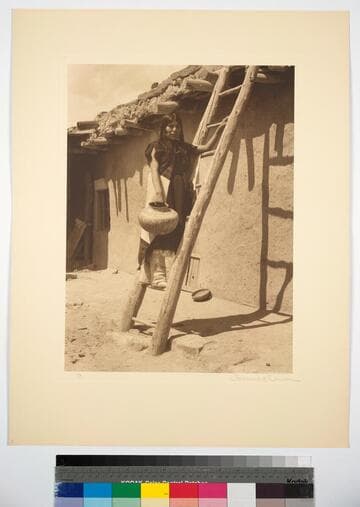
  • Young Hopi matron of Mishongnovi

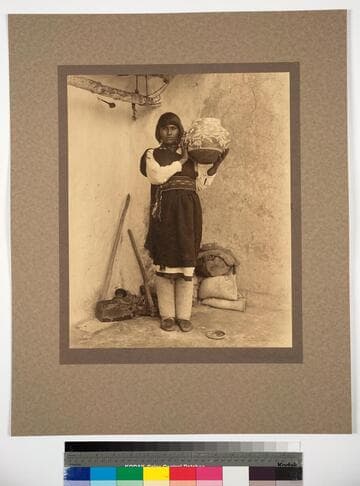
    Young Hopi matron of Mishongnovi

    Visual Materials

    Hopi woman standing on a ladder and holding a decorated pot.

    photCL 312

  • The wife and little daughter of the Governor of Isleta

    The wife and little daughter of the Governor of Isleta

    Visual Materials

    Woman with a decorated pot balanced on her head and holding hands with a young girl.

    photCL 312

  • Teelatza, Hopi matron, Pueblo of Walpi, First Mesa, Arizona

    Teelatza, Hopi matron, Pueblo of Walpi, First Mesa, Arizona

    Visual Materials

    A Hopi woman sitting by a pool of water, using a gourd to gather water into a pot.

    photCL 312

  • Image not available

    Abada, one of the best potters of Acoma

    Visual Materials

    This set of photographs by Frederick Monsen focuses on Native Americans of the Southwest in mostly candid views taken in Pueblo communities, approx. 1886-1911. Photographs include portraits, ceremonies, dances, pueblos, livestock and scenes of daily activities. A smaller portion of the collection consists of landscapes, cliff-dwellings, ruins, gold miners, wagons and scenes of pioneer life in the West. Some photographs were made by Monsen while he was with U.S. Geological Surveys (including the Brown-Stanton survey of 1889), and others during his own photography trips. The majority of Native Americans pictured are Hopi and Navajo, but there are also Paiute, Apache, and Pueblo Indians. There are a few views of Mojave Indians of Southern California, and natives of Baja, Mexico. There are several views of Indian children, shown with and without clothes, in their daily activities. Scenes of non-Indian Western life include men in covered wagons on trails, gold prospectors and stagecoaches. There are many artistic landscape views of canyons, buttes and mesas; Death Valley; salt beds; ancient ruins; cactus and other desert plants. Unusual subjects of note are three photographs of skeletons in the deserts of Arizona and one view of the covered bodies of prospectors being carried on burros. The prints are all signed by Monsen and have typed or handwritten captions on the back, written by Monsen.

    photCL 312