Skip to content

OPEN TODAY: 10 A.M.–5 P.M.

Tickets

Visual Materials

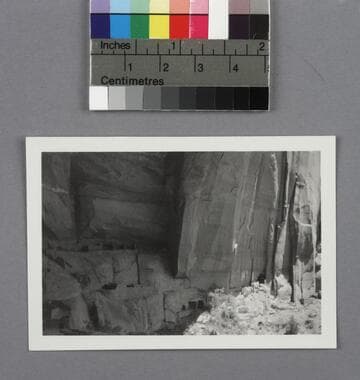
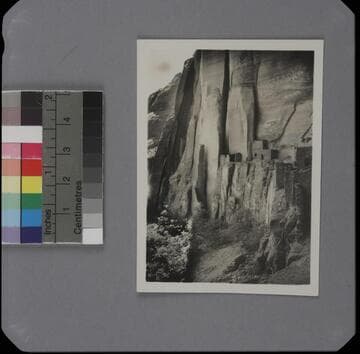
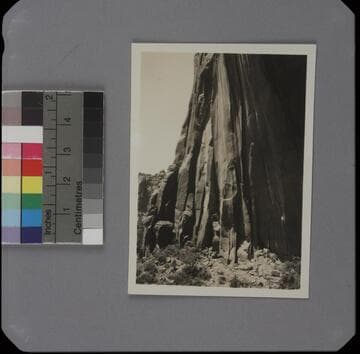
Cliff Dwellings, Frijoles Canyon, Bandelier National Monument, New Mexico

1 of 2


You might also be interested in

  • Image not available

    Cliff Dwellings, Frijoles Canyon, Bandelier National Monument, New Mexico

    Visual Materials

    Landscape view of rock cliffs and dwellings. Photographer: Robert Shlaer. Title, date and copyright etched into metal back of photograph.

    (photDAG 116)

  • Image not available

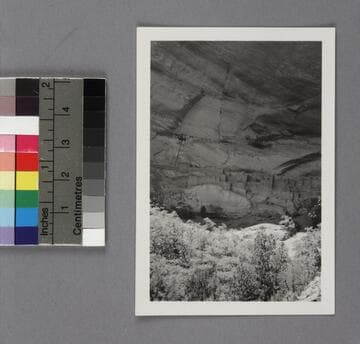
    Photographs of Arizona and New Mexico

    Visual Materials

    Consists of ten photographs by various photographs including Edwin Baer of Prescott, Arizona and George Wharton James. They encompass landscape photographs presumably of the Grand Canyon, views of the cliff dwellings at Walnut Canyon National Monument, and dwellings and life in Acoma, New Mexico.

    photPF 2020-2029
  • Image not available

    Ser. 6/ Volume 1. Harold Hannibal photographs, Pacific Coast and New Mexico

    Visual Materials

    Photographs are by Harold Hannibal, a geologist and paleontologist who co-wrote a paper with Arnold called "The Marine Tertiary Stratigraphy of the North Pacific Coast of America," Proceedings of the American Philosophical Society, 1913. California Predominately views and descriptions of topography and geological features, with only two views of oil wells in Tapo Canyon, Simi Valley. At site are "Messrs. Wheat, DeFreest, Koeberle and Moore" examining rock (No. 188). Locations: Calaveras Valley; Carmel; Catalina Island; Contra Costa County; Corral Hollow; Crescent City; Dixieland; Eel River; Garbeville; Imperial Valley; Kettleman Hills; Marysville Buttes; Merced Falls; Monterey Bay; Mt. Diablo; Oroville; San Benito-Monterey County; San Bruno; San Diego; San Pedro Hills; Simi Valley. Others of note: No. 120: Oil wharf with pipeline, Monterey. No. 178-179: Chinese laborers at Calexico, Ca., waiting for train to take them to work in cotton fields at Mexicali, Baja. No. 209: Howard Hannibal standing next to "best fossil locality in the Monterey - 27-mile drive between Pebble Beach Lodge and Carmel." New Mexico/Texas border Topography and vegetation views, showing mountains and springs, sandstone, dry river beds. One view of oil well in Rocky Arroyo, Carlsbad, New Mexico. Oregon, Washington, Vancouver Island and Sooke Harbor, British Columbia Many views and descriptions of coastal topography, beaches and cliffs, particularly in the Olympic Peninsula. Others of note: No. 4-5: J. M. McDonald and Harold Hannibal at Oak Bay. No. 143-146: Native Americans (described as "Siwashes," most likely Coast Salish or Quinault) catching fish on beach at Taholah.

    photCL 311

  • Image not available

    Acoma, New Mexico. Prehistoric vertical trail leading from the desert plain below the cliff to the top of the great rock on which the town of Acoma is located

    Visual Materials

    This set of photographs by Frederick Monsen focuses on Native Americans of the Southwest in mostly candid views taken in Pueblo communities, approx. 1886-1911. Photographs include portraits, ceremonies, dances, pueblos, livestock and scenes of daily activities. A smaller portion of the collection consists of landscapes, cliff-dwellings, ruins, gold miners, wagons and scenes of pioneer life in the West. Some photographs were made by Monsen while he was with U.S. Geological Surveys (including the Brown-Stanton survey of 1889), and others during his own photography trips. The majority of Native Americans pictured are Hopi and Navajo, but there are also Paiute, Apache, and Pueblo Indians. There are a few views of Mojave Indians of Southern California, and natives of Baja, Mexico. There are several views of Indian children, shown with and without clothes, in their daily activities. Scenes of non-Indian Western life include men in covered wagons on trails, gold prospectors and stagecoaches. There are many artistic landscape views of canyons, buttes and mesas; Death Valley; salt beds; ancient ruins; cactus and other desert plants. Unusual subjects of note are three photographs of skeletons in the deserts of Arizona and one view of the covered bodies of prospectors being carried on burros. The prints are all signed by Monsen and have typed or handwritten captions on the back, written by Monsen.

    photCL 312

  • Image not available

    Photographs and Negatives

    Visual Materials

    The Peabody Collection's 649 glass plate negatives (4 x 5 inch, 5 x 7 inch, and 8 x 10 inch), 1049 film negatives (4 x 5 inch, 5 x 7 inch, 8 x 10 inch, and stereograph), 24 photograph albums (housing 1174 photographs), and 887 loose photographs (boudoir photographs, cartes-de-visite, stereographs, 8 x 10 inch prints, and large mounted prints), dated 1884-1940s (bulk 1890s-1900s), provide a comprehensive view of Peabody's career as a commercial landscape photographer as well as a broad visual survey of many national parks and monuments in New England and the western United States. The first section is devoted to portraits of Peabody and other family members, and images from family trips. The majority of the portraits (of Peabody, his wife Dora, and his daughter Mildred) were taken by Peabody in his studio at 52 Boylston Street in Boston; a few were created by Peabody while in partnership with Alexander Hesler in Chicago; and others were taken by Hesler. Almost all of these were created in boudoir photograph format; some exist in carte-de-visite format. Also included are views of Peabody with his camera equipment in the outdoors, views of Peabody's studio in Pasadena, oversize group photographs of Peabody's tenth reunion at Dartmouth College, and the interior of "Car 159" (Peabody's private car on the Boston and Maine Railroad). This section also contains many photographs of Dora and Mildred Peabody, including images of Mildred at summer camp on Lake Champlain in Vermont, with friends, and at various national parks. Peabody's house at 800 Prospect Boulevard in Pasadena is represented in this section, as is his boat, the Venture (depicted in mounted photographs and in a photograph album with an extensive narrative detailing a trip up the New England coast in 1884). This section also contains three photograph albums describing a trip taken by Peabody, his wife, and friends to the north, south, and middle forks of the King's River circa 1900. Other images in this section include a group photograph of Peabody's father's fiftieth Dartmouth class reunion and a portrait of Peabody's Aunt Helen. The section devoted to New England consists exclusively of city and landscape views. Included are views of Rosemary Hall in Greenwich, Connecticut and Wellesley College in Wellesley, Massachusetts (in stereograph format); historic sites in and around Boston; the Massachusetts coast, including Salem; New Hampshire (including Lake Winnipesaukee, Franconia Notch, and the White Mountains); the coast of Maine (including Bald Head Cliff near York, and the Isles of Shoals); Lake Champlain and Mallett's Bay in Vermont; and images of the Boston and Maine Railroad trains and ferries. Many of these images include Dora and Mildred Peabody; many were published in Picturesque New England (box 50); and many have identifications written by Peabody on the verso. Peabody's work in Western Canada consists entirely of photographs of the Canadian Rockies in the provinces of British Columbia and Alberta. Included are views of the Fraser River Canyon; the Hermit Range; Mounts Abbot, Sir Donald, Stephen, Aberdeen, Lefroy, Victoria, Assiniboine; views of Asulkan, Illecillewaet, Yoho, and Victoria Glaciers; various mountain ranges (including the Selkirk Mountains, Ottertail Range, Van Horne Range, and Cascade Mountains); Wapta Canyon, River and Peak; the Yoho Valley; Lake Louise, Moraine Lake, Lake Agnes, and Lake Minnewanka; Bow River and Valley; and the Banff Springs Hotel and surrounding areas. These sites are encompassed by Banff National Park, Glacier National Park, and Yoho National Park. Some of the photographs were taken for the Detroit Publishing Company and have imprinted copyright information; others bear Peabody's copyright. The majority have identifications written by Peabody on the verso. Following Canada are images documenting Peabody's interest in the Western United States' national parks and monuments. Images of Yellowstone National Park include 6 photograph albums, loose prints, and negatives depicting a wide variety of scenery in the park, including geysers and hot springs; the Firehole River; Yellowstone Lake, River, Canyon, and the falls; the Teton Mountains; Shoshone Canyon and Buffalo Bill Dam; and scenery along the road to Cody, Wyoming. The Container List details the contents of each album. Many images are duplicated throughout the albums. Zion National Park and Bryce Canyon National Park are documented in 5 photograph albums (3 depicting images of both, and one each of Zion and Bryce), some stereographs, and negatives all depicting numerous views of the canyons and rock formations in each park. The Container List details the contents of each album. Many images are duplicated throughout the albums. The Grand Canyon is represented by one photograph album, many prints and many corresponding, and unique, negatives. In addition to views of the Canyon are images of a Hopi war dance. Yosemite National Park is depicted in one photograph album, prints, and negatives. Views include Yosemite Valley; many of the falls and rock formations; and Mariposa Grove. The section describing assorted national parks and monuments includes a wide variety of both landscape and Native American images taken in Colorado, Utah, Arizona, and New Mexico. Mesa Verde National Park is represented by a photograph album and negatives. Rainbow Natural Bridge, Natural Bridges National Monument, the Goblet of Venus (near Blanding, Utah), Chaco Canyon, Canyon de Chelly, Laguna Pueblo, La Mesa Encantada, Acoma (New Mexico), the Petrified Forest, Painted Desert, Walnut Canyon, the Grand Canyon, Crater Lake, Aztec Ruins National Monument, Montezuma's Castle, Craters of the Moon, and Casa Grande are documented in three photograph albums entitled "National Monuments of Desert and Mesa" as well as in loose prints and negatives. The Container List details the contents of each album. Many images are duplicated throughout the albums. Death Valley is documented in a photograph album, loose prints, and negatives, including images taken by Spence Air Photo. Also documented are Canyonlands National Park and Glacier National Park. Other images of the Western United States include Hoover Dam, the Snake River in Idaho, and Ship's Rock in New Mexico; and other images of Arizona include Monument Valley and San Xavier del Bac Mission. Other Native American images depict members of the Navajo, Hopi and Papago tribes; examples of Navajo architecture; Walpi and Oraibi, two Hopi communities; and miscellaneous images. The collection also includes many identified and unidentified views of California. Included are the Imperial Valley; street scenes and buildings in central Los Angeles; the Hollywood Hotel and Paul de Longpre's residence in Hollywood; the San Gabriel region of Southern California, including downtown Pasadena, the Maryland and Green Hotels, California Institute of Technology, the Huntington Library, various residences and gardens in Pasadena, the Tournament of Roses Parade, Altadena, Mount Wilson and Mount Lowe, the San Gabriel Mountains, and Morris Dam; the Hotel Virginia in Long Beach; Avalon Bay; the Mojave Desert; northern California, including Lake Tahoe, San Jose, Stanford University, Muir Woods and redwood trees, Mount Shasta, and Kit Carson Pass in the Sierra Nevada Mountains; Riverside County, including views of Riverside, the Mission Inn, Sherman Indian Institute, Mount Rubidoux, views of orange groves, the Coachella Valley, Palm Canyon, Redlands, Corona, and the Salton Sea; the San Bernardino Mountains; San Diego County, including San Diego and Point Loma, Coronado Beach, Estudillo House in San Diego, La Jolla, Torrey Pines, and San Juan Capistrano Point; San Francisco and vicinity, including Chinatown, the Golden Gate, the Panama-Pacific International Exposition, Mount Hamilton and the Lick Observatory, buildings on the University of California at Berkeley campus, and the Monterey Peninsula; Santa Barbara County, including the Potter Hotel, the Eaton and Gillespie residences in Montecito, Nordhoff [Ojai], and oil wells at Summerland; Camulos Ranch, the Ventura River, Santa Paula, and a sugar factory in Oxnard, in Ventura County; the California Missions; and unidentified California landscapes, residences, and ocean views. Also included are Peabody's photo sets, "El Camino Real, Part I," "Southern California, Part I," and "Southern California, Part II." "El Camino Real, Part I" is accompanied by Peabody's narration, which is housed in Box 53, folder 10. The latter two sets depict Hoover Dam, the Mojave Desert, Death Valley, Palm Canyon, the San Bernardino Mountains, citrus groves and the citrus industry, the Huntington Library, Colonel Rust and the Gold of Ophir rosebush, California Institute of Technology, the San Gabriel Valley, Pasadena, and the Mount Wilson Observatory. Many of these images are duplicated elswhere in the collection. Peabody traveled to Mexico to photograph Spanish colonial architecture and the collection includes picturesque sights and churches in Mexico City, Zacatecas, Guanajuato, Taxco, Guadalajara, Veracruz, Cordoba, Celaya, Cholula, Chapultepec, Puebla, Tepozotlan, and Cuernavaca; Mounts Orizaba and Popocatepetl; and various miscellaneous images. Some of these were published in Sylvester Baxter's Spanish Colonial architecture in Mexico. The Mexican images also include a Peabody photo set, "Vera Cruz to the City of Mexico" (Box 1, numbers 573-597). Peabody's travels to Europe are documented in one photograph album of Great Britain, and another of France and Switzerland. The Great Britain album contains images of London, Stratford-upon-Avon, and cathedrals in Peterborough, Lincoln, York, and Chester. Other images of Great Britain include Poet's Corner in Westminster Abbey, and an additional view of Stratford-upon-Avon. The France album contains images of Paris (specifically Notre Dame Cathedral); Chartres, Amiens, and Rheims cathedrals; and Lucerne and the Swiss Alps. Peabody's studio work includes portraits in boudoir format. These are portraits of women, men, women and children, and children. Peabody also made photographs of architectural plans and renderings. These include work by architects Allison and Allison (Santa Monica High School, Union High School in Merced, and the Chautauqua of the Pacific in Los Angeles), Buchanan and Brockway, Foss Designing and Building Company (a hotel in Altadena), Hubert Frohman and Harold H. Martin (including residences in Pasasdena and Altadena, and a woman's club in Tucson), Bertram Grosvenor Goodhue (renderings of the Throop College of Technology), Elmer Grey, Myron Hunt (including Pomona College, residences in Montecito and Pasadena), and Withey and Davis (grammar schools in Artesia, Hermosa Beach, and Los Angeles); engineers W.P. Shepherd and Herbert A. Hamm (a factory and a commercial structure); and landscape architect Paul G. Thiene (Goodyear Gardens). Peabody also photographed plants and animals, some of which are included in the "Southern California" photo sets. Included are plants in the garden of the Myron Hunt Residence in Pasadena and the cactus garden at the Hotel del Monte in Monterey, and a number of images of animal displays at a natural history museum. Miscellaneous images in the collection include unidentified landscapes; images of students at work in a classroom; copies of daguerrotypes and paintings; and photographs of the Handy Stereopticon. Some negatives exist in print form; references to these occurences can be found with the prints and on the negative envelopes. Some envelopes contained two or more negatives of the same scene, each with slight variations; Peabody gave these variant images the same number as the original. Some negatives, particularly early glass plates, were reproduced by Peabody in other formats, primarily 5 x 7 inch film. See the ledgers in Series III, Subseries III.A. for details.

    Series I.

  • Image not available

    Mildred E. Baker Travel Scrapbook Collection

    Visual Materials

    This collection contains thirteen scrapbooks chiefly containing narratives, snapshots, and clippings documenting summer canyoneering, camping, and tourism trips to the American Southwest, the Colorado River, the Canadian Rockies, and Wyoming by Mildred E. Baker in the 1930s and early 1940s, as well as volumes related to Baker's activities and interest in bookbinding, poetry, and the Woodcraft League of America in Upstate New York with bookbinder John F. Grabau in the late 1920s and early 1930s. Most of these volumes reflect the participation of two Baker's friends from Buffalo: Florence A. Huck and Katherine Crisp, who frequently traveled with Baker and were also involved in bookbinding activities. Baker's scrapbooks follow a general pattern: they include typescript narratives describing her trips illustrated with her own snapshots and handwritten captions, as well as clippings from magazines and newspapers, occasional bits of poetry, and printed ephemera. Most of the travel volumes include lists of identified flowers, shrubs, trees, ferns, and birds seen on the trip, reflecting Baker's interests in botany and ornithology. Many of the volumes also have additional printed items laid in, with some dating through the early 1970s. All of the volumes are bound in decorative bindings stamped "Grabau," and most have marbled paper over the pasteboards. Volumes 1-2 and 4-5 reflect Baker's experiences chiefly at Sunset Hill, the summer home and artist's retreat of bookbinder John F. Grabau, near Buffalo, New York, presumably as part of the "Ojenta tribe" of the Woodcraft League of America. These volumes include poetry and photographs of the landscape, camping and other outdoor outings and group events, and bookbinding, including images of binding specimens by both Grabau and Baker. Many of the volumes document Baker's trips to the American Southwest, including her experience as one of the first women to raft the full-length of the Colorado River as part of the 1940 "Nevills Expedition" led by Norman D. Nevills. Her scrapbook of this trip (volume 11) includes photographs of Nevills and his wife, Doris Nevills, and fellow participants including mining engineer John S. Southworth of Glendale, California, botanist Hugh C. Cutler of the Missouri Botanical Gardens, and future Arizona Senator Barry Goldwater. Regular themes among the photographs include depictions of the natural landscape including rock formations, mountains, rivers, and lakes; Native Americans; trading posts; cliff dwellings; petroglyphs; lodgings; and means of transportation including by train, automobile, airplane, horse, and burro. The volumes consist of: Volume 1: [Sunset Hill "Christmas" scrapbook album]. 1927-1928 Locations referenced: Sunset Hill estate, Upstate New York Volume 2: Sunset Hill and Algonquin Park "birthday" scrapbook album]. 1927-1933 Locations referenced: Sunset Hill estate, Upstate New York, and Algonquin Park, Ontario, Canada Volume 3: Navajo Mountain, 1931 Locations referenced: Arizona, Utah, and New Mexico Volume 4: Anthology of Sunset Hill (Its Trails and Poets' Glen). 1934-approximately 1938 Locations referenced: Upstate New York Volume 5: Some poems of Sunset Hill by Mildred E. Baker, Wm. P. Alexander and others. Christmas 1936 Locations referenced: Upstate New York Volume 6: Memorable Days on Teton Trails. 1934 Locations referenced: Grand Teton National Park, Wyoming Volume 7: A Glimpse of the Old West. August 16th-September 2nd, 1935 Locations referenced: New Mexico Volume 8: Wilderness Wanderings in Jasper and Mt. Robson Parks. July 3rd to 23rd 1936 Locations referenced: Alberta, Canadian Rockies Volume 9: Trail Riding in the Canadian Rockies. July 23 to Aug. 8, 1937 Locations referenced: Alberta, Canadian Rockies Volume 10: Peace of Rainbow and Canyon. July 2nd to 25th, 1938 Locations referenced: Arizona, Utah Volume 11: Rough Water. Down the Green and Colorado Rivers from Green River, Wyoming, to Boulder Dam, Nevada. June 20th-August 22nd, 1940 Locations referenced: Wyoming, Utah, Nevada Volume 12: [Scrapbook of newspaper clippings related to the Nevills expedition]. 1940-1941 Locations referenced: Wyoming, Utah, Nevada Volume 13: Turquoise Skies and Copper Canyon. 1942 Locations referenced: Arizona, Utah

    photCL 237