Manuscripts
Aaron Noble His Book
Image not available
You might also be interested in
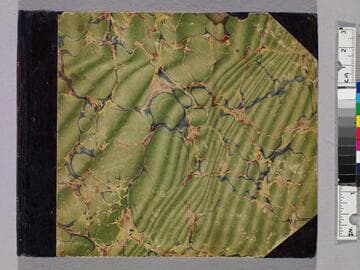
Obadiah Harris journal, 1758 May 22-October 23
Manuscripts
A regimental journal kept by Obadiah Harris. The journal covers James Abercromby’s 1758 campaign, including the Battle of Ticonderoga (July 6, 1758) and its aftermath. In addition, there is also information on Fort Edward and Fort George between 1758 May 22 and October 23.
mssHM 591
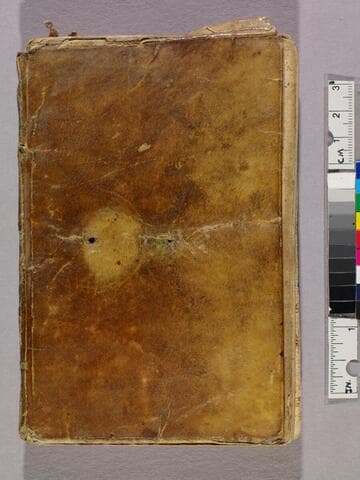
Joseph Nichols diary, 1758-1766
Manuscripts
Journal kept by Joseph Nichols during May -- Nov. 1758. Long, detailed daily entries describe the formation of the company and regiment, the march from Farmingham, Mass. to Ticonderoga, military operations, including the battle of Carrillon; the commanding officers -- Jonathan Bagley, James Abercromby, Robert Rogers, Rufus Putnam, and others; regimental news and camp life, courts martial and punishments meted out for various transgressions, sickness, etc. Also included is a roster of Taplin's company. The rest of the manuscript contains miscellaneous daily entries, accounts, promissory notes, and a recipe "How to Make Ink;" this portion covers the period from Mar. 22, 1759 to May 1766. There is also the following title (crossed out): "Fortunatus Nichols Aboard the Cutter September 23. I Begun a journal." Also included are 9 receipts, promissory notes, etc. by Joseph and Fortunatus Nichols.
mssHM 89
Image not available
James Abercromby papers
Manuscripts
This collection primarily contains letters, reports, memorials, returns, etc., written by or received from British Major General James Abercromby during the 1758 campaign of the British army in North America during the Seven Years' War. Specifically, the materials concern orders and instructions for the 1758 campaign; the embargo on colonial shipping in March 1758; the fall of Fort William Henry and complications related to the exchange of prisoners of war; the surrender of Louisburg; the expedition against Fort Ticonderoga and the defeat of Major General Abercromby and the death of Lord Howe; alarms up the Mohawk River and defenses at the Oneida Carrying Place; the conquest of Fort Frontenac (Cadaraqui) by Lieutenant Colonel John Bradstreet; Brigadier General John Forbes's expedition against Fort Duquesne, including difficulties with the Indian allies, opening of roads and establishing of outposts, the capture of Major Grant and party, and French evacuation of Fort Duquesne; British use of and relations with the Indians, including efforts to unite the Northern and Southern Indians to the English cause, the gathering of the Cherokee Nation for the expedition to the Ohio, under Brigadier General Forbes, and conferences called by Pennsylvania Governor Denny; the internal affairs of the British army including returns of troops, arms, provisions, etc., returns of the staff, and orders, warrants, appointments, etc., issued by the commander in chief; and the recall of Abercromby. Correspondents include John Appy, John Bradstreet, James De Lancey, William Denny, John Forbes, Thomas Hancock, Sir William Johnson, Charles Lawrence, William Pitt, 1st Earl of Chatham, Thomas Pownall, John Stanwix, and others. The documents addressed to Abercromy are originals; papers emanating from Abercromy are chiefly office copies written by secretaries. The collection also contains a fragment of the 1758 journal of Christian Frederick Post and genealogical data on the Abercromby family. Also included is an item written by a relative of Abercromby, also named James Abercromby (1707-1775). He was agent to England for Virginia and North Carolina from 1738 to 1760. The item is "An examination of the acts of Parliament relative to the trade and the government of our American colonies." (1752, AB 976). Some notable items include: Abercromby, James. An Examination Of the Acts of Parliament Relative To the Trade and the Government of our American Colonies. Also The Different Constitutions of Government in the Colonies Considered With Remarks By way of a Bill for Amendment of the Laws of this Kingdom in Relation to the Government and Trade of these Colonies... May, 1752 James Abercromby, a kinsman of the general, served as agent in England for the colonies of Virginia and the Carolinas, 1738-60. Howe, George Augustus, 3d Viscount Howe. Two letters to Major General Abercromby reporting his preparations for the attack on Ticonderoga. May 28 and 30, 1758 Post, Christian Frederick. Journal of Frederick Post's Journey from Philadelphia to Wioming. June 20, 1758 Relation de L'affaire du 8 Julliet 1758. (Endorsed: A French Relation of the Affair of the 8th July, 1758, At Ticonderoga, found in the woods at Gaspe.) Wolfe, James. Letter to Major General Abercromby, relating his activities following the surrender of Louisbourg until his departure for England. Sept. 30, 1758
mssAB
Image not available
Warrant on Abraham Mortier
Manuscripts
Letters, reports, memorials, returns, etc., cover the 1758 campaign of the British army in North America during the Seven Years' War, specifically: the embargo on colonial shipping, the fall of Fort William Henry, the surrender of Louisburg, the expedition against Fort Ticonderoga, the conquest of Fort Frontenac (Cadaraqui), John Forbes's expedition against Fort Duquesne, British use of and relations with the Indians, the internal affairs of the British army, and the recall of Abercromby.
AB 914
Image not available
James Abercrombie letter to William Johnson Barnt
Manuscripts
Letters, reports, memorials, returns, etc., cover the 1758 campaign of the British army in North America during the Seven Years' War, specifically: the embargo on colonial shipping, the fall of Fort William Henry, the surrender of Louisburg, the expedition against Fort Ticonderoga, the conquest of Fort Frontenac (Cadaraqui), John Forbes's expedition against Fort Duquesne, British use of and relations with the Indians, the internal affairs of the British army, and the recall of Abercromby.
mssFAC 674
Image not available
1758 April 14-April 27
Manuscripts
Letters, reports, memorials, returns, etc., cover the 1758 campaign of the British army in North America during the Seven Years' War, specifically: the embargo on colonial shipping, the fall of Fort William Henry, the surrender of Louisburg, the expedition against Fort Ticonderoga, the conquest of Fort Frontenac (Cadaraqui), John Forbes's expedition against Fort Duquesne, British use of and relations with the Indians, the internal affairs of the British army, and the recall of Abercromby.
mssAB